
Deepfakes, AI, and the New Frontier of Digital Evidence Copyright 2026, Steve Burgess
It was true forty years ago and it’s truer today: “Just because it’s digital doesn’t mean it’s true.”
We’re now facing a challenge that would have seemed like science fiction when I started doing civilian data recovery back in 1985: artificial intelligence that can fabricate images, videos, and audio recordings so convincing that even experts can be fooled. Welcome to the era of deepfakes, and trust me, it’s already changing how courts handle digital evidence.
What We’re Up Against
Let me paint you a picture of where we are right now. AI-generated content has moved from research labs to consumer smartphones. Anyone with a decent app can now:
 – Swap faces in videos with frightening accuracy
– Clone voices from just a few seconds of sample audio
– Generate entirely synthetic images of people who don’t exist … and of those who do.
– Alter existing footage in ways that leave minimal technical traces
I’ve examined cases where manipulated video evidence looked so authentic that initial reviewers accepted it without question. The technology has democratized deception in ways we’ve never seen before.
The Authentication Crisis
Here’s what keeps me up at night: our traditional methods of authenticating digital evidence are struggling to keep pace.
For decades, we’ve relied on metadata analysis, file structure examination, and chain of custody documentation. Those tools still matter, but in many cases, they’re no longer enough. When AI can generate a video from scratch—complete with realistic metadata, proper codec structures, and no obvious manipulation artifacts—we need a fundamentally different approach.
The challenge isn’t just technical. It’s philosophical. We’re moving from a world where we asked “Has this been altered?” to one where we must ask “Is this even real to begin with?”
The Metadata Problem
In traditional forensics – and most of the time even now – metadata has been our friend. Creation dates, device identifiers, GPS coordinates—these data points help us verify authenticity and establish provenance. But AI-generated content can include perfectly plausible metadata that’s entirely fabricated.
The “No Negative” Dilemma
Back in the day, photos had negative. Even in modern (digital) photography, there’s usually a kind of “negative”—an original file that shows a clear progression from capture to final image. With AI generation, there is no negative. The content springs into existence fully formed. How do you authenticate something that has no original?
What Courts Are Starting to Do
The good news? Courts are waking up to this challenge, and we’re seeing some interesting responses.
Enhanced Authentication Standards
Federal jurisdictions are raising the bar for digital evidence authentication. In June, 2025, the Judicial Conference of the US’s Committee on Rules of Practice and Procedure approved Federal Rule of Evidence 707, that ensures that AI-derived evidence is subject to the same Daubert standards as traditional expert testimony.
A judge might require the expert to run multiple AI detection algorithms on submitted video evidence—not because there was any specific reason to doubt it, but because the stakes were high enough to warrant extra scrutiny.
Blockchain and Cryptographic Verification
Courts are also showing increased interest in cryptographic authentication methods. Some organizations are now implementing systems that create cryptographic signatures at the moment of capture—essentially a digital seal that proves when and where content was created.
The Content Authenticity Initiative (backed by Adobe, Microsoft, public media, camera manufacturers, and others) is pushing standards for embedding authentication data directly into digital files. While not yet widely adopted in legal contexts, even in its sixth year, attorneys ask about these tools more frequently.
Expert Testimony Evolution
The role of digital forensics experts is expanding. It’s no longer enough to say “I examined this file and found no signs of manipulation.” Now we’re being asked:
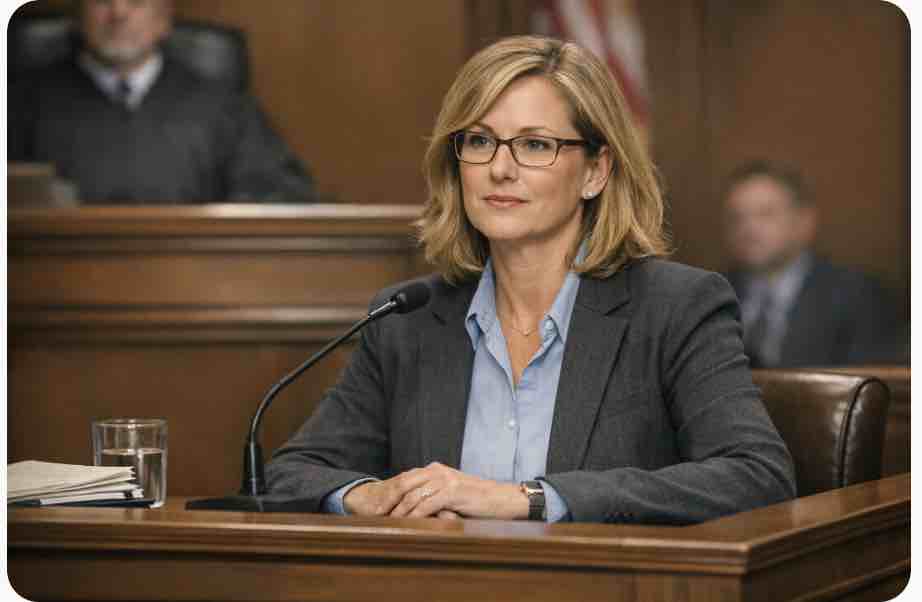 What is the probability this content is AI-generated?
– Can you rule out deepfake creation methods?
– What authentication measures were in place at capture?
– Are there any positive indicators of authenticity beyond the absence of manipulation?
That last question is crucial. We’re moving from negative verification (looking for signs of tampering) to positive verification (finding affirmative proof of authenticity).
The Detection Arms Race
Here’s the uncomfortable truth: detection is always playing catch-up … and the law is yet is almost always further behind. By the time we develop tools to identify one generation of AI-generated content, the next generation is already better at evading detection.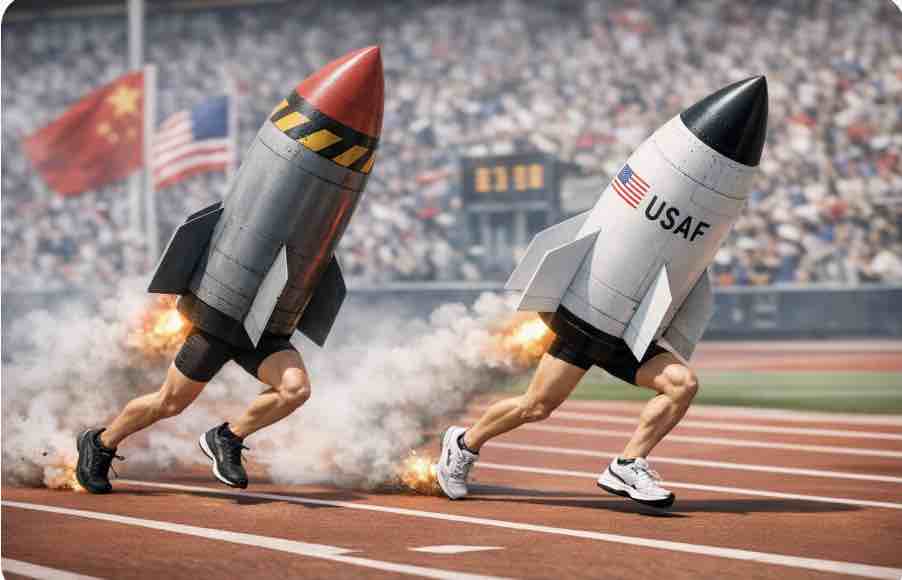
I use multiple AI detection tools in my practice—everything from Microsoft’s Video Authenticator to various academic research tools. They’re helpful, but they’re not foolproof. Detection accuracy varies wildly depending on the generation method, content type, and how much post-processing has been applied.
What Actually Works
In my experience, the most reliable authentication approaches combine multiple layers:
**Technical analysis**: Running the content through various detection algorithms and looking for statistical anomalies that suggest AI generation.
**Contextual verification**: Examining the chain of custody, device provenance, and whether the content’s existence makes sense given the circumstances.
**Comparative analysis**: Looking for consistency across multiple pieces of evidence. If someone has ten photos from an event and one looks AI-generated, that’s a red flag.
**Behavioral indicators**: Sometimes the content itself reveals impossibilities—lighting that doesn’t match the environment, shadows that fall the wrong direction, or subtle physics violations that our brains recognize even if we can’t articulate why something looks “off.”
Best Practices for Attorneys
If you’re handling cases with digital evidence (and let’s face it, what case doesn’t have digital evidence these days?), here’s what you need to know:
**Get evidence authenticated early.** Don’t wait until trial to discover your key video evidence might be AI-generated. Have it examined during discovery.
**Document the chain of custody meticulously.** With deepfakes, provenance matters more than ever. Know where the evidence came from and every hand it passed through.
**Preserve the original files.** Maintain the original files in their native format with all metadata intact.
**Consider protective orders.** If you’re worried about evidence being used to create convincing fakes, seek protective orders limiting how digital evidence can be used or distributed.
**Budget for expert analysis.** Authenticating digital evidence in the age of AI isn’t cheap, but it’s a lot less expensive than losing a case because you relied on fabricated evidence.
Looking Ahead
 This problem is going to get worse before it gets better. AI generation capabilities are improving faster than detection methods. Within a few years, we’ll likely face synthetic evidence that’s indistinguishable from authentic content using current detection methods.
But I’m not entirely pessimistic. The legal system has adapted to technological challenges before—from fingerprinting to DNA analysis to digital forensics itself. We’ll adapt to this too. And the tools are also improving fairly fast – sometimes with the help of AI itself.
The key is recognizing that we’re in a transition period. The old rules still apply, but they’re no longer sufficient. (But isn’t that always the case?) Courts are developing new standards, forensic methods are evolving, and the legal community is taking this threat seriously.
The Bottom Line
If there’s one thing I want you to take away from this article, it’s this: question everything. That advice has always been good practice in digital forensics, but now it’s absolutely essential.
Don’t assume video evidence is authentic because it looks convincing. Don’t trust audio recordings without verification. Don’t accept digital evidence at face value, no matter how legitimate it appears.
The technology to fabricate convincing digital evidence is here, it’s accessible, and it’s being used. Whether you’re prosecuting, defending, or presiding over cases, you need to understand this landscape and demand rigorous authentication of digital evidence.
Because in 2026, seeing—or hearing—is no longer believing. And that changes everything.
*Steve Burgess is a digital forensics expert with over 40 years of experience and has worked on more than 20,000 cases. Burgess Forensics has been serving attorneys with digital evidence analysis since 1984. If you have questions about authenticating digital evidence in your cases, we’re here to help.