20 Digital Forensics Facts for Attorneys

by | Nov 24, 2025 | Uncategorized | 0 comments

20 Digital Forensics Facts for Attorneys

copyright 2025 Steve Burgess

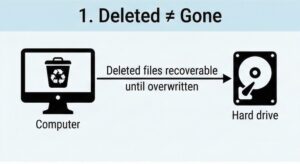
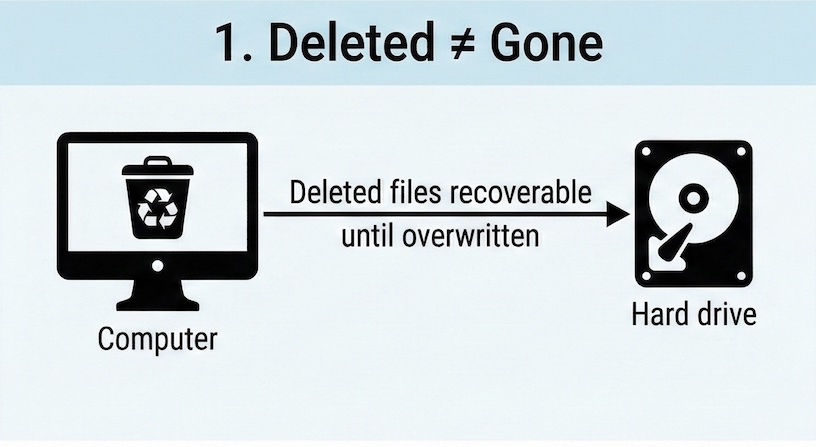
  1. Deleted ≠ gone: Most deleted files remain recoverable until overwritten.
  2. Every case is a data case: Even “non-digital” disputes usually contain text messages, emails, or documents.
  3. Forensic imaging: A “bit-for-bit” or forensic working copy preserves evidence without altering the original.
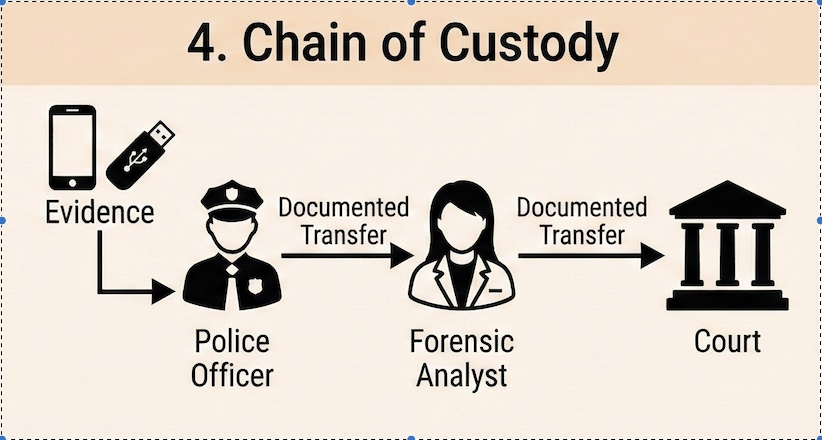
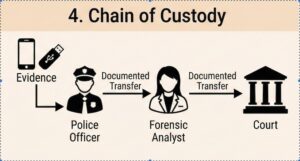
  4. Chain of custody: In many cases, essential to maintain evidentiary integrity and courtroom admissibility.
.

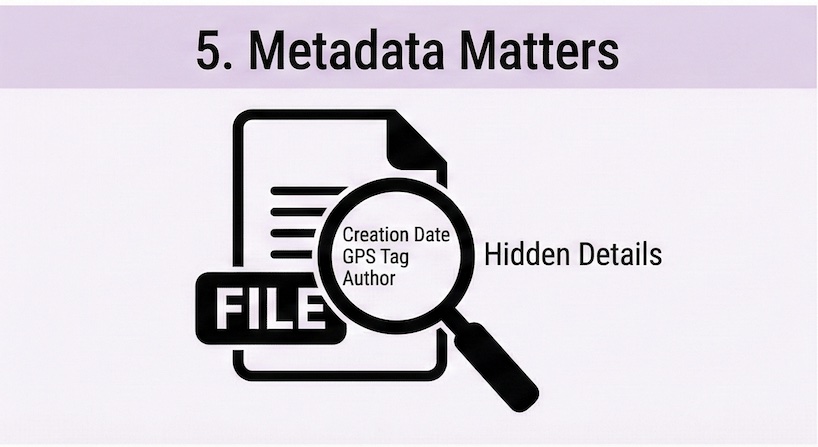
  1. Metadata matters: Creation dates, edits, GPS tags, author information, and other metadata often expose truth.blank
  1. Timestamps can shift: System clock errors or time-zone changes can mislead investigators.
  1. Mobile devices: Contain texts, call logs, app data, health data, photos, and location trails.
  1. Cloud & social media: Require proper authentication; screenshots alone are weak evidence.
  1. Encryption & passwords: Legal access may require subpoenas or warrants; never guess or force.
  1. Spoliation risk: Even good-faith access or copying can alter metadata; always image first.
  2. File format forensics: Different file types (PDF, DOCX, JPEG) embed distinct hidden data.
  1. Logs tell stories: System, email, and access logs can reconstruct user actions – and possibly reveal unauthorized access.
  1. Emails are not always what they seem: Headers reveal routing and spoofing attempts.
  1. Video & photo forensics: Compression artifacts, error levels, and metadata help expose tampering.
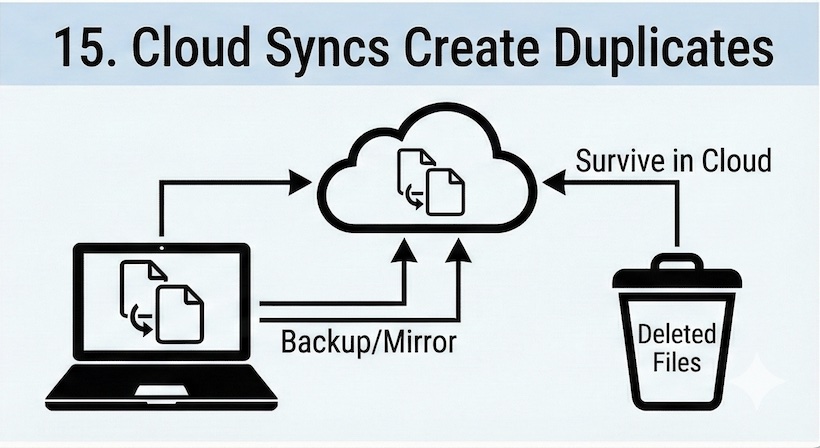
  1. Cloud syncs create duplicates: Deleted files may survive in backups or mirrored accounts.blank
  1. Expert reports: Should clearly document tools, hashes, and methodology for repeatability.
  1. Hash values: Digital “fingerprints” that confirm evidence integrity (MD5, SHA-1, SHA-256).
  1. Forensic duplicators: Hardware tools create certified copies with built-in write blockers.
  1. Legal collaboration: Early involvement of forensic experts reduces spoliation and increases admissibility.
  1. Everything starts with data of some sort: computer, phone, tablet, email, documents.

Related Posts

Digital Privacy vs. Discovery: Where the Line Is Drawn

Copyright 2026, Steve Burgess Every so often I’ll sit across the Zoom from an attorney—or from a pro se litigant—who wants everything. Every text message the opposing party has ever sent. Every photo on their phone. Every search query. Every deleted file. Every app....

Your Preservation Letter Is Missing These 6 Data Sources

I’m sure that you have reviewed a lot of preservation letters. Some of them are excellent — thorough, specific, and sent at exactly the right moment. Others read like they were written in 1997 and then never updated, which, in fairness, some of them were. Still others...

Deleted Does Not Always Mean Gone (But It Doesn’t Mean Recoverable Either)

(copyright Steve Burgess 2026) One of my favorite client conversations goes something like this: Client: “I deleted it.” Attorney: “Can you get it back?” Forensic examiner: “…define ‘it.’” Television has taught us two completely opposite and equally wrong ideas:...

Digital Evidence Is Bigger Than Most Cases Realize

Digital Evidence Is Bigger Than Most Cases Realize copyright Steve Burgess 2026 There’s a scene in television forensics that appears in approximately 94.27% of all episodes. Someone in a dark room says, “Pull up the computer.” Then ten seconds later, another person...

Metadata as a Silent Witness: What It Can Reveal About Your Case

Metadata as a Silent Witness: What It Can Reveal About Your Case Copyright 2026, Steve Burgess Every digital file has two stories to tell. The first is the one you can read — the contract, the email, the photograph. The second story is invisible, buried in the file...

Where Critical Evidence Hides: Email, Texts, & Cloud Data Part II

Email, Texts, & Cloud Data: Where Critical Evidence Hides, Part II        Copyright 2026, Steve Burgess In over four decades of digital forensics work, I've examined more than 20,000 devices and pieces of digital evidence. And in that time I've developed a...

Can You Trust What You See? The Rise of Deepfakes and What It Means for Justice

Can You Trust What You See? The Rise of Deepfakes and What It Means for Justice Copyright 2026, Steve Burgess I've been working with digital evidence since 1985, and I've seen a lot of changes. Back then, the biggest challenge was recovering data from a 10 MB hard...

Deepfakes, AI, and the New Frontier of Digital Evidence

Deepfakes, AI, and the New Frontier of Digital Evidence Copyright 2026, Steve Burgess It was true forty years ago and it's truer today: "Just because it's digital doesn't mean it's true." We're now facing a challenge that would have seemed like science fiction when I...

Top 5 Mistakes Lawyers Make With Digital Evidence

Top 5 Mistakes Lawyers Make With Digital Evidence  -      Copyright 2026, Steve Burgess After forty years working with attorneys on digital evidence, I've seen the same mistakes cost cases time and again. Here are five of the most common – and how to avoid them....

Screenshots Are Barely Evidence: How to Authenticate Digital Data in Court

Screenshots Are Barely Evidence: How to Authenticate Digital Data in Court By Steve Burgess, Copyright 2025 Screenshots are convenient. They’re quick, visual, and easy for clients to share — but in the courtroom, convenience can be a trap. Screenshots alone rarely...

Pin It on Pinterest

Share This