
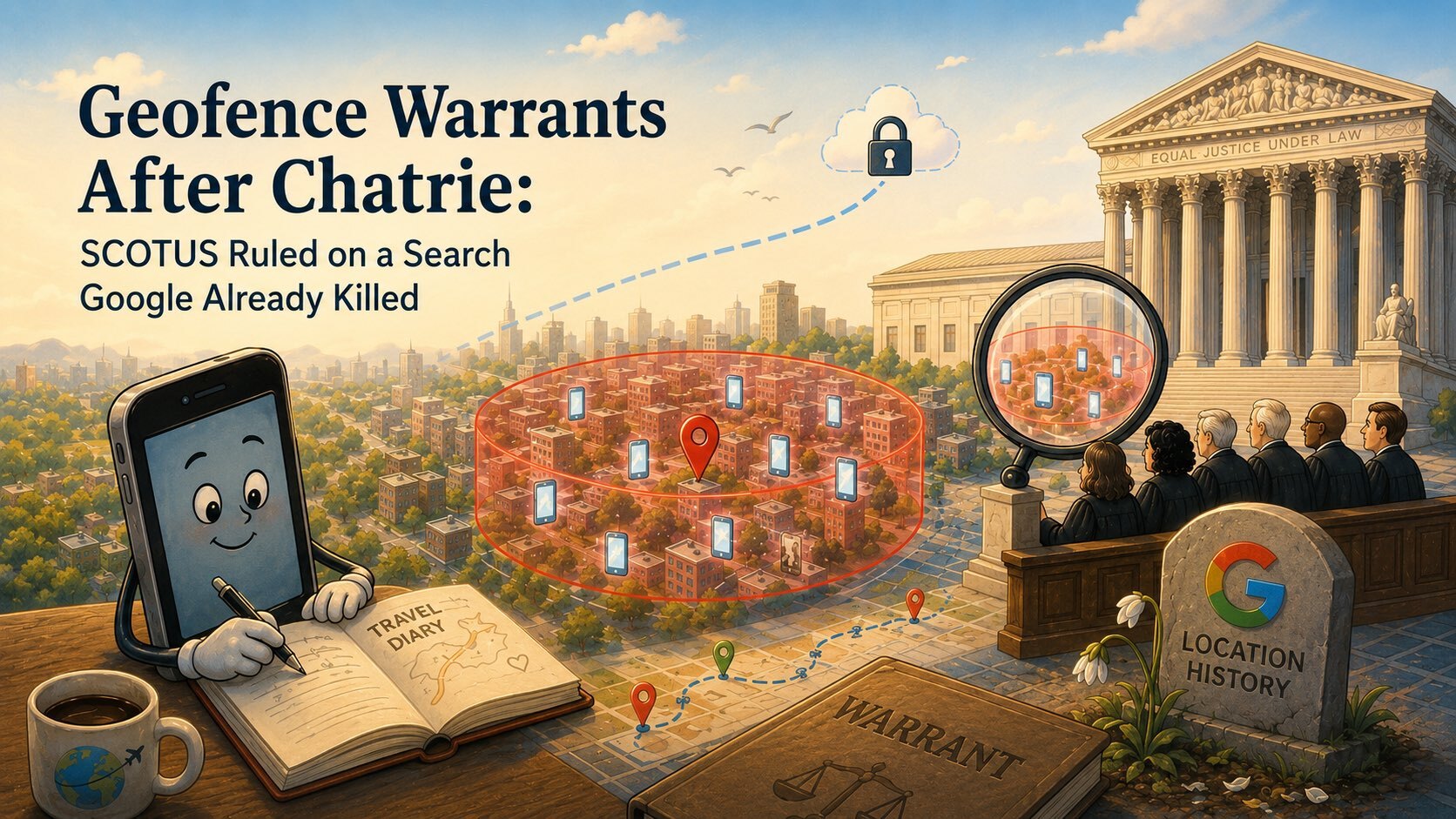
Your phone has been keeping a travel diary. For years, Google kept a copy too.

That made possible one of the more controversial investigative tools of the smartphone era: the geofence warrant, sometimes called a reverse-location warrant. Instead of starting with a suspect and asking where that person’s phone had been, police could start with a place and a time and ask Google which devices had been there.
It was the sort of technology made for a crime show and sure enough, it’s likely been in countless episodes of this and that cop show, with thousands of mentions in the news headlines. Draw a circle around the crime scene, pick a time window, find the phones inside it and start looking for your suspect.
There was just one problem. By the time the Supreme Court finally ruled on the practice this summer, Google had already pulled the plug on the system that made the classic Google geofence warrant work.
First, what exactly is geofencing?
The terminology gets muddled, especially outside the technical world.
Geofencing is a technology; a geofence warrant is a legal process that uses location records in a very particular way.
Geofencing itself is not dead, illegal or particularly exotic. A geofence is simply a virtual geographic boundary. Apps can use one to do something when a device enters or leaves an area. Retailers can use it to serve ads, which is just what we need – more ads, no? Your shopping app can notice that you’re near a store. A fleet-management system can report when a truck reaches a destination. Your smart-home system might turn on the lights for you when you get home.
A geofence warrant turns the idea around.
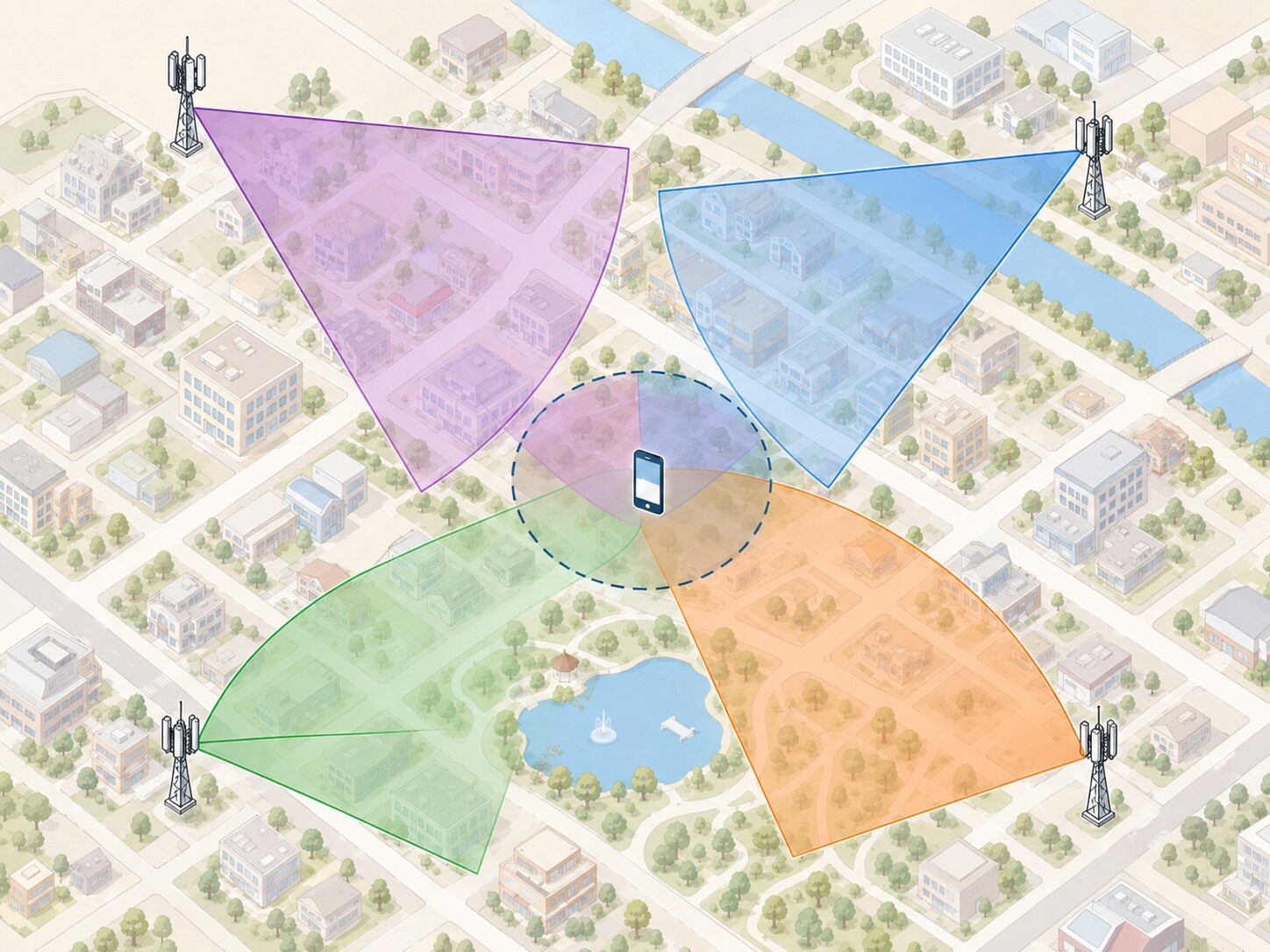
Instead of asking whether one known device crossed a boundary, investigators historically could give Google a geographic area and a time period and compel it to search its Location History database for devices whose records put them inside the “fence.” Initially, Google returned anonymized device information. Investigators could then narrow the candidates and, through additional steps, obtain identifying information. For some time, the technique was anything but obscure: Google received 982 geofence warrants in 2018 and more than 11,000 in 2020.
An ordinary warrant says, in effect, “Tell me where this person was.”
A geofence warrant says, “Tell me who was here.”
That difference became a rather large constitutional question.
Then Google changed the map.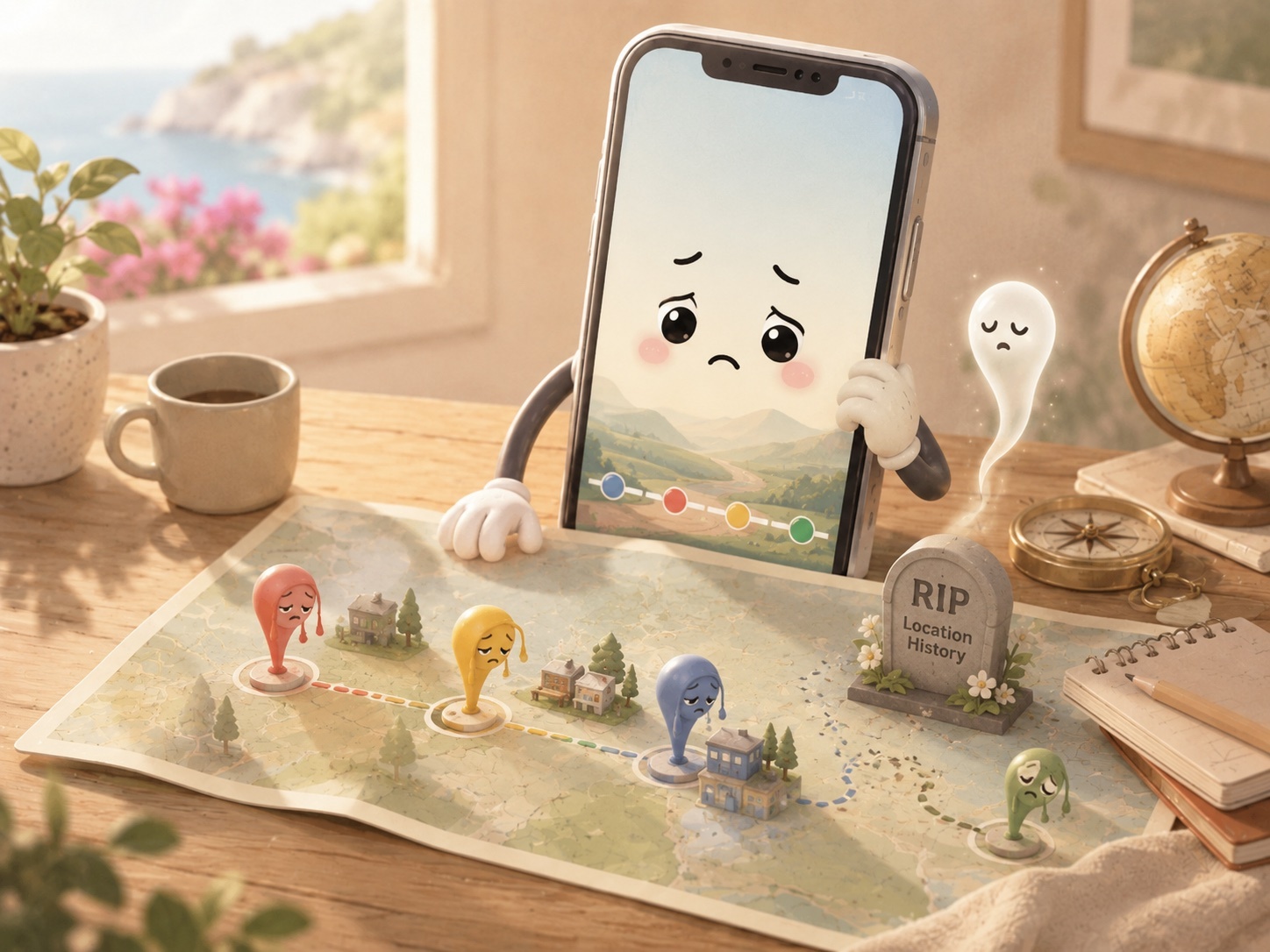
In December 2023, Google announced a major redesign of Location History, now presented to users as Google Maps Timeline. Instead of keeping Timeline centrally on Google’s servers, Google said the information would be stored on the user’s device.
Google’s public explanation emphasized privacy and customer control. The company said putting Timeline on the device would give users “even more control” over this personal information. Location History was already opt-in and off by default.
There was another consequence, and it was a big one.
Once Google no longer possessed a giant centralized repository of users’ Location History, police could no longer hand Google a circle and a time period and have it search that repository for everybody inside.
Reporting at the time suggested that was not an accidental side effect. Forbes reported that a Google employee said that, along with the privacy benefits, the change was intended specifically to bring an end to these broad location searches. Google’s public announcement itself did not say that, so I wouldn’t put words in Google’s mouth. But the practical result is beyond dispute.
The migration took time. By July 2025, according to Google and the Supreme Court, Location History was being stored on individual devices rather than Google’s servers. Google told the Court that it was therefore no longer capable of responding to geofence warrants seeking that Location History data.
In other words, Google leapfrogged SCOTUS and redesigned where location evidence was stored.
Then SCOTUS arrived. On June 29, 2026, the Supreme Court decided Chatrie v. United States.
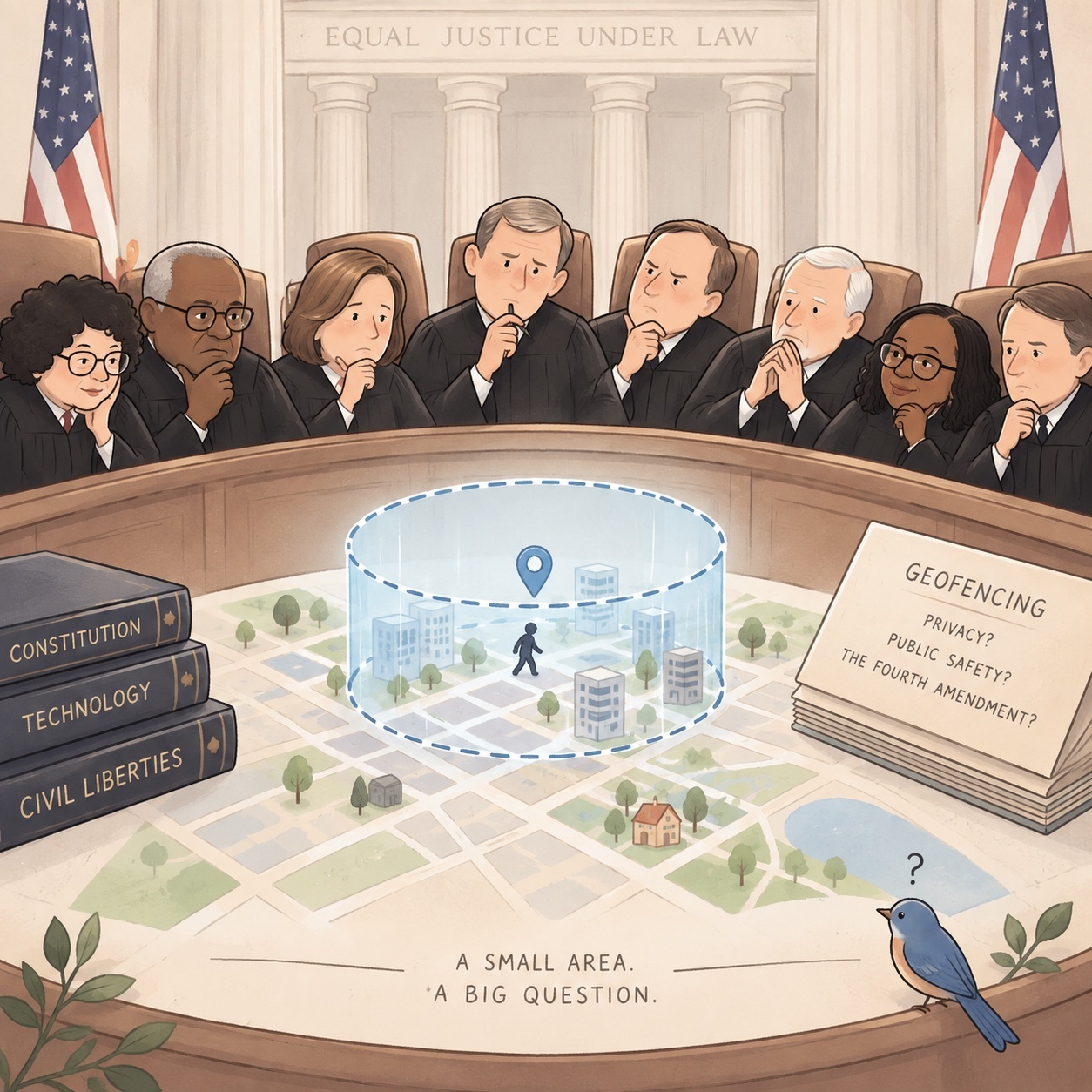 The case arose from a 2019 Virginia credit union robbery. Investigators did not initially know who the robber was. They obtained a geofence warrant directing Google to search Location History information for devices in the area with a 150-meter radius around the building during the relevant period. That process eventually helped identify Okello Chatrie.
The Supreme Court held that police conducted a Fourth Amendment search when they acquired Chatrie’s location information from Google, because a person has a reasonable expectation of privacy in his cellphone location information.
That’s significant., but it is narrower than saying, “The Supreme Court outlawed geofence warrants.” It didn’t.
The Court did not decide that every conceivable geofence warrant is unconstitutional, nor did it finally resolve whether the particular warrant in Chatrie satisfied all the requirements of the Fourth Amendment. Those questions remain more complicated.
And there is a touch of technological irony here. Justice Alito’s dissent actually called the Google procedure before the Court “now-obsolete.”
Rarely does technology have the courtesy to become obsolete while the Supreme Court is still writing the opinion.
So, are geofence warrants dead?
Google’s classic Location History geofence warrant largely is, but geofencing itself isn’t. Reverse-location searching isn’t necessarily, either.
 Incidentally, Apple isn’t an alternative source for the same information. Apple says it has no data to provide in response to geofence requests. At least as far back as 2015, Apple was telling law enforcement that it did not track the geolocation of individual devices or retain GPS information for a specific device or user. An iPhone may know a great deal about where it has been. That doesn’t necessarily mean Apple does.
Other companies, however, may hold different kinds of location data that law enforcement can seek. Telecommunications carriers, app providers, ride-sharing companies and other services can possess records tied to where a device or account was at a particular time. Those systems are technically different from Google’s old Location History database, and they should not all be lumped together simply because somebody draws a circle on a map.
More important for lawyers, location evidence itself certainly hasn’t gone away.
Phones still contain or generate GPS information, Wi-Fi and Bluetooth data, application location records, photographs with location metadata, navigation history and other traces that may help answer the familiar question: Where was this phone?
But the source matters. So does the acquisition method.
A targeted search warrant for a known person’s records is not a Google geofence warrant. Location evidence extracted from a seized phone isn’t one either. Cell-site records aren’t Google Location History. A map with a dot on it may look wonderfully definitive on television, but the underlying technology determines what that dot actually means.
That is where the forensic work begins.
The map still isn’t the territory
Whatever Chatrie ultimately does to Fourth Amendment law, the forensic caution remains the same.
Location data can be remarkably powerful, and it can also be remarkably easy to oversell. A coordinate may carry an accuracy estimate. Different technologies derive location differently. A phone in a building is not necessarily a person in a particular room, and a dot on a map did not acquire certainty merely because PowerPoint made it red.
Ask where the location came from. Ask how it was collected. Get the underlying records and available accuracy information rather than relying solely on the tidy map someone prepared from them.
The old Google geofence may have gone away before the Supreme Court could finish arguing about it. The larger question has not:
When a phone tells us where it was, exactly what does it know, who else can get that information, and how certain should we be? Or, as The Bard might have imagined: To be there or not to be there: that is the geofence question. The forensic question is how well the data can answer it.
When has location data in one of your cases turned out to say less, or more, than everyone first assumed?
Steve Burgess is a digital forensics expert witness with more than 40 years of experience and over 20,000 devices and digital media examined. He is the principal of Burgess Forensics, founded in 1985.
Don’t miss a single issue of our informative newsletter … Subscribe!