
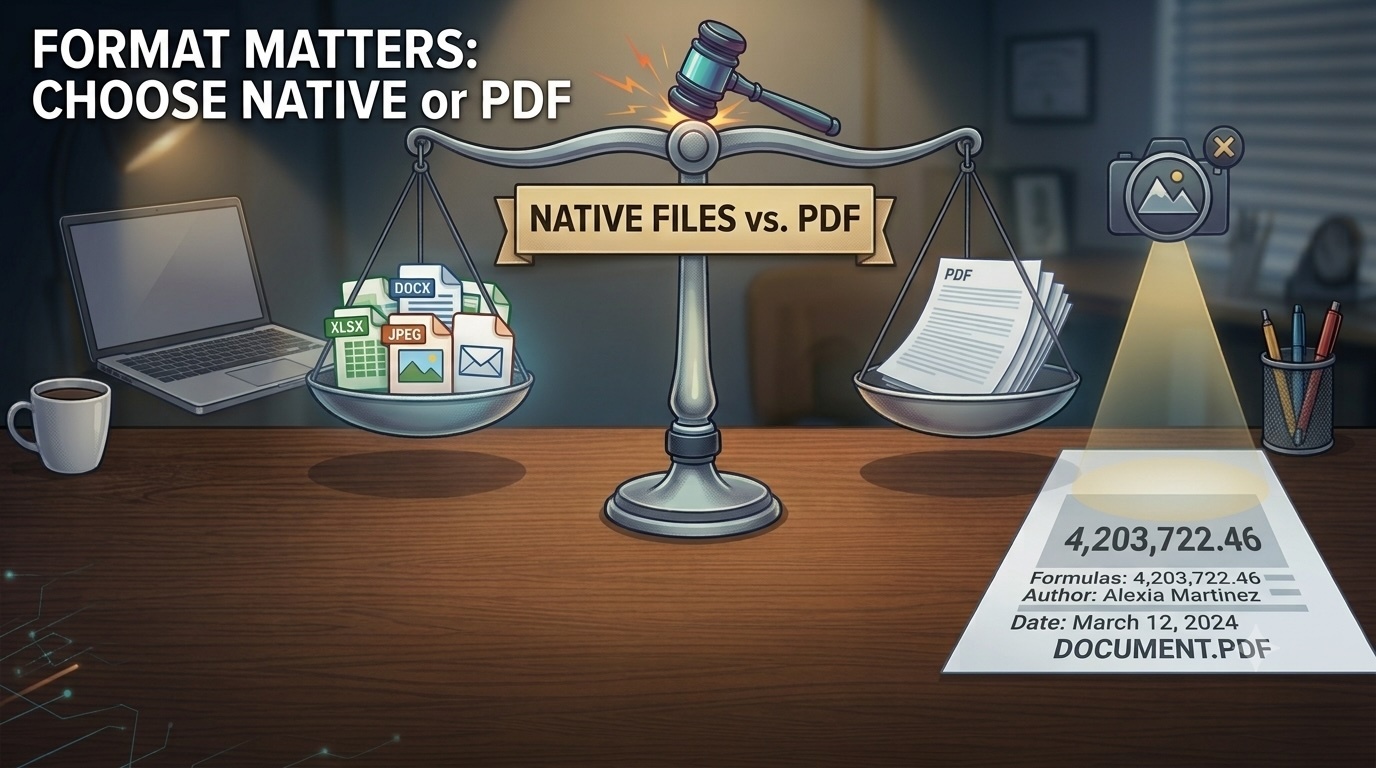
The format language in a discovery request is easy to skip over. It looks like boilerplate. It reads like boilerplate. It is actually boilerplate. And so it gets waved through: “produce as PDF, that’s fine.” Maybe not so fine when that same attorney later pays me to explain why the file on my screen can’t answer the question the case now turns on.
Here’s the thing the other side already knows: whoever picks the format picks what you get to see. It’s just how the rules work. Under Federal Rule of Civil Procedure 34(b)(2)(E), the party asking for the documents gets to specify the form they arrive in. Don’t specify, and the choice falls to the producing side, with “reasonably usable” form as the only floor — and reasonably usable is a long way from native. Say nothing about format and you’ve handed them the pen.
Native files vs. PDFs sounds like an argument for the IT department, right? It isn’t. It’s one of the quietest, most consequential fights in the whole discovery process, and it’s worth having on purpose.
A PDF is a photograph of a document, not the document
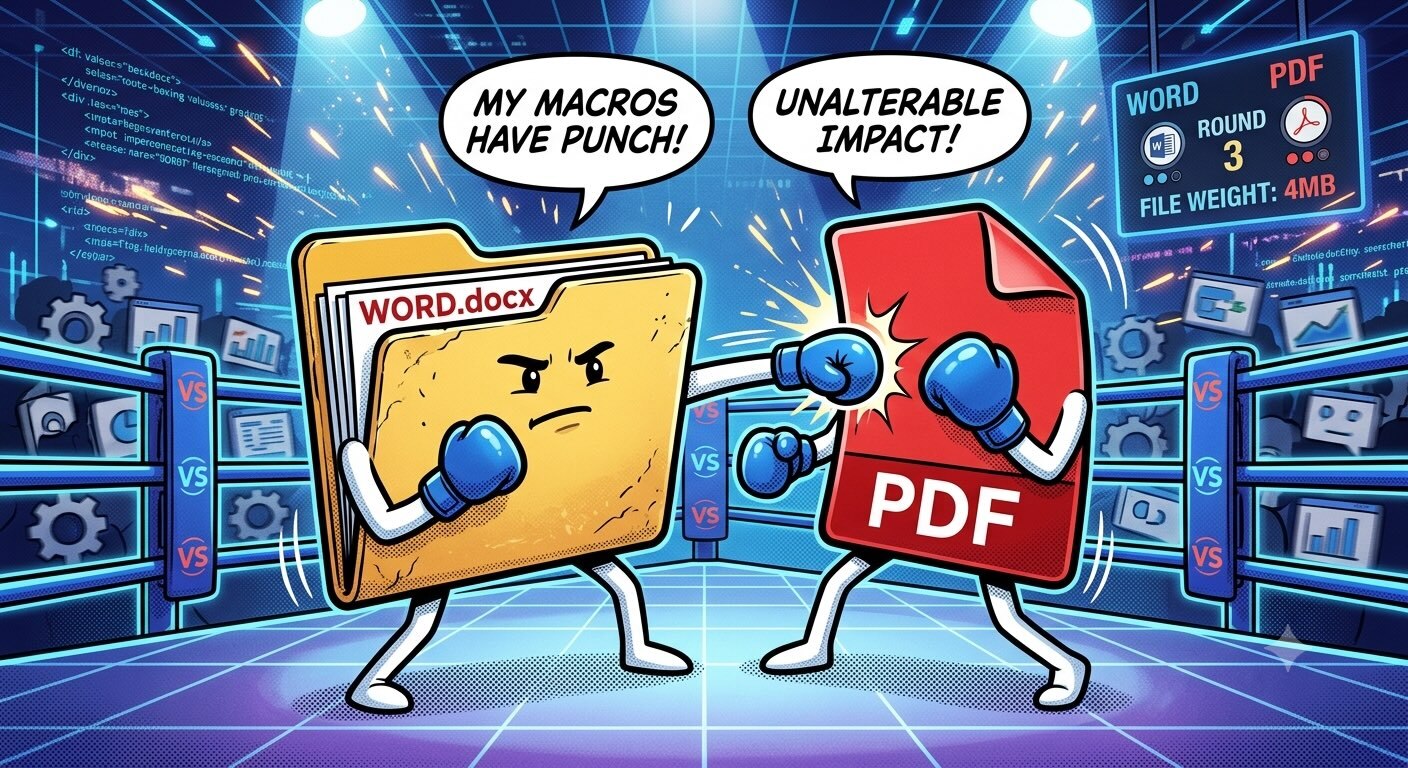 A native file is the thing itself – the spreadsheet with its formulas still doing math, the email with its full routing header, the Word file that still remembers every draft, the photo that quietly wrote down where and when it was taken. I have a paragraph in my engagement letter saying so, albeit a bit more succinctly. A PDF or a TIFF is a picture of that file after someone chose the pose.
What really gets me is when evidence is produced as a printout of a PDF of a scan of a PDF created from the actual original file. Happens all the time. But it’s several steps away from what really happened and far from the metadata that tells the real story.
Such “pictures” drop exactly the parts that tend to win cases. Most of the metadata, describing fields such as who made it, when, on what device, and sometimes where tends to get lost when a PDF is generated from it. This is the difference between “he says he wrote it in March” and knowing, to the minute, that he didn’t.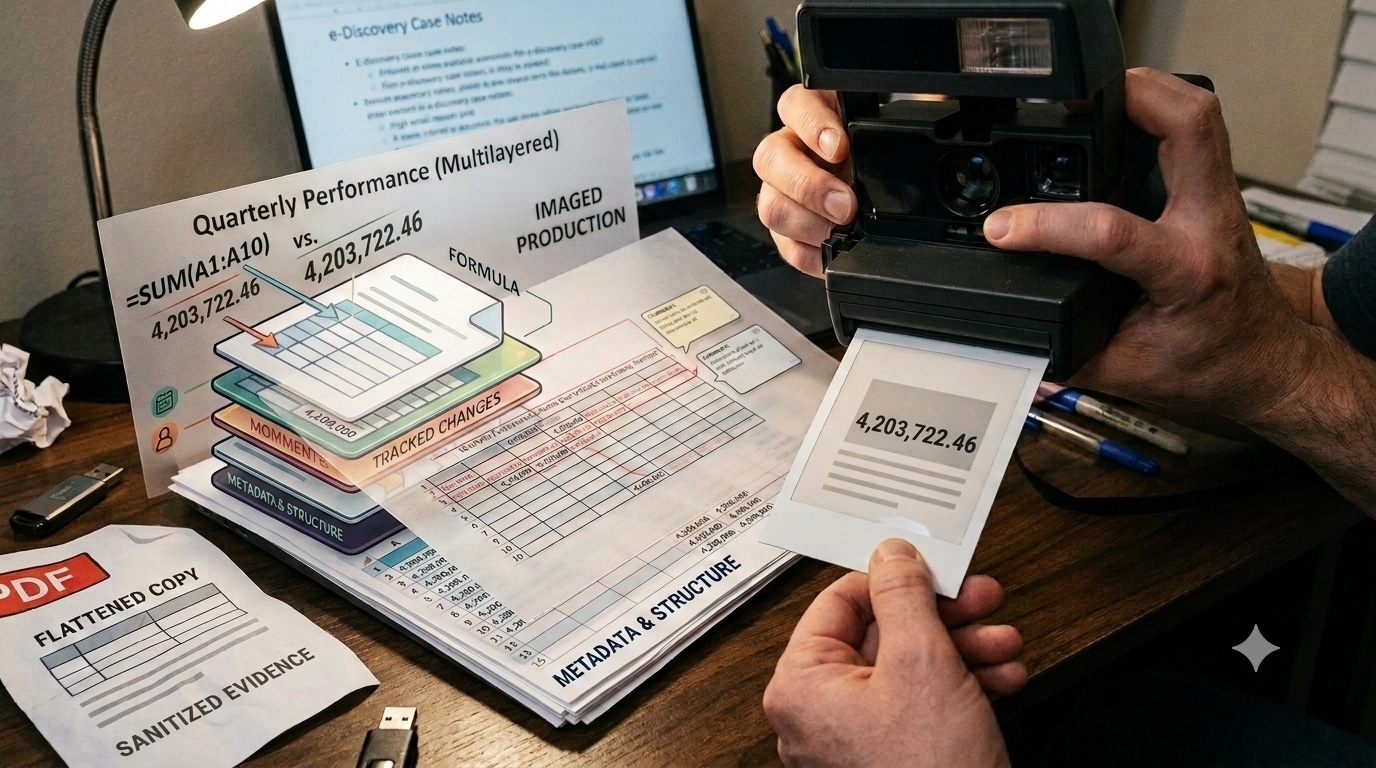
A spreadsheet may show you a very precise value of 4,203,722.46 in the flattened PDF version but hides the formulae and structure that generated a possibly different number. A document that previously contained all the things people put in a document before they remembered other people would read the tracked changes, comments, hidden rows? Native format keeps them. The flattened copy forgets them, conveniently.
Hash values and container data are integrity signals that may let you and me confirm that the document produced is the same as the original are casualties of a PDF export. It snaps that verification thread and asks you to just take everybody’s word for it instead.
None of it comes back, either. You can’t un-flatten a PDF into the original any more than you can un-fry a flapjack. Once it’s produced that way, the missing data isn’t hiding from you. It’s gone.

I had a case where the “date digitized” EXIF metadata from a series of photos supported one side’s story. However, deeper in the metadata, there was satellite data that cast real doubt on the story being told. Satellites and their atomic clocks don’t lie about the time or the day.
Why the other side is so agreeable about it
Producing in PDF usually isn’t laziness. It’s control wearing the costume of laziness. A flattened production is easier to redact, easier to Bates-stamp, and, in a happy coincidence, easier to sanitize. The timestamp that wrecks the timeline, the author who wasn’t supposed to be within a mile of that memo, the formula that shows how a number really got built: all of it vanishes in the conversion, and it vanishes wearing the respectable coat of “routine document handling” rather than the orange jumpsuit of spoliation.
To be fair, imaged production isn’t always a dodge. Sometimes there are honest reasons for it — privilege review, redacting personal or protected information, or real proportionality under Rule 26(b)(1) when native would cost more than the whole dispute is worth. Those reasons are legitimate. The trick is to make the other side say so out loud, in the protocol, so that “we imaged it” has to be justified rather than simply assumed.
I should be clear that “save as PDF” is also a genuinely lousy way to strip metadata even when someone’s trying to be honest. It leaves things behind and takes things it shouldn’t. But that’s a different article. For today: the party that controls the format controls the evidence, and they know it even if your side doesn’t.
The fight is won in the ESI protocol, not in a motion six months later. 

This is the part I most want attorneys to hear. By the time you’re standing in front of a judge complaining about a bad production, you’re asking to redo work the other side has every incentive to slow-walk into the next fiscal year — and you’re explaining to your client why the schedule, and the bill, went sideways. Nobody enjoys that conversation. Least of all the person who once said “PDF is fine.”
So specify the format on the front end, in writing:
- Ask for native formats, with metadata, by default for anything data-rich — spreadsheets, databases, structured exports — with load files that actually carry the field data. Boring to negotiate. Priceless to have.
- Name the metadata fields you want. Custodian, author, created and modified dates, an MD5 or SHA-1 hash, and parent/child relationships so attachments stay tied to their emails. “With metadata” is an invitation for the other side to read the phrase as generously as their conscience allows.
- Reserve the right to request native format for anything produced as an image, and say so up front — so when you invoke it, it’s a term of the deal and not an ambush they get to act wounded about.
- Bring your examiner in before the language is set, not after the production disappoints. Format specs written without technical input have a real talent for asking, very precisely, for the wrong thing.
The bottom line
This is not enhance-the-reflection-in-the-sunglasses forensics. It’s plumbing. It’s unglamorous, it’s easy to skip, and it is very often the only thing standing between evidence you can build a case on and a tidy picture of evidence you have to take on faith.
Courts increasingly expect native production where format carries meaning, and (hopefully) increasingly treat “well, we already gave you a PDF” as the weak answer it is. But you don’t drift there by luck. You get there by treating format as a substantive term of the case — argued with the same seriousness as scope and custodians, and about a thousand times more attention than it usually gets. 
Have the fight early. It’s a great deal cheaper than the one you’ll have later, in front of a judge, with your client and their checkbook watching.
What’s the worst production-format surprise you’ve run into — native you wish you’d demanded, a PDF that turned out to be hiding the whole case, or something else entirely?
Steve Burgess is a digital forensics expert witness with more than 40 years of experience and over 20,000 devices and digital media examined. He is the principal of Burgess Forensics, founded in 1984.
Don’t miss a single issue of our informative newsletter … Subscribe now!